
More Than Just Food:
A Shared Agenda for Student Food Security and Success


This brief combines data and expertise from three leading national organizations in the student basic needs field: The Hope Center for Student Basic Needs, Trellis Strategies, and Swipe Out Hunger.
Across the datasets, a consistent picture emerges: student hunger remains widespread and interconnected with other hardships. We distill our shared evidence into five key findings and four actions institutions can take now to strengthen the affordability infrastructure students need to persist and thrive.
112,240
students
299
campuses leaders
3
surveys
Executive Summary
Student food insecurity remains one of the most persistent barriers to college completion in the United States. Yet the data across national datasets from our organizations also reveal a more complex reality: hunger rarely exists in isolation, many students remain disconnected from available supports, and campus food programs are increasingly being asked to address a growing affordability crisis with limited and unstable resources.
At a time of rising costs and increasing uncertainty around the public and institutional supports students rely upon, findings from The Hope Center, Trellis Strategies, and Swipe Out Hunger reveal five realities shaping student food insecurity today.
The challenge facing higher education is not whether students need support, but whether the systems designed to provide that support are strong enough to meet the need.
Key Findings:
Approximately four in ten college students experience food insecurity, underscoring that student hunger remains a pervasive challenge rather than an isolated occurence.
Food insecurity remains widespread.

Food insecurity rarely occurs in isolation.

Students experiencing food insecurity frequently face housing insecurity, mental health challenges, transportation barriers, childcare challenges, and other forms of basic needs insecurity that can threaten their ability to persist and succeed.
Many students remain disconnected from available supports.

Awareness gaps, barriers to access, and challenges navigating resources continue to prevent students from utilizing programs designed to help meet their basic needs.

Campus food programs are serving more students with limited resources.


Colleges and universities are distributing millions of meals and serving hundreds of thousands of students each year, yet many food access programs operate with limited staffing, unstable funding streams, and growing demand.
Food insecurity is closely linked to student success outcomes.
Food insecurity is associated with higher rates of stop-out risk, financial strain, and other barriers that can undermine persistence, completion, and economic mobility.



Student food insecurity is not new. But the systems students rely on to afford college—and daily life—are being tested in new ways.
Students are navigating the highest costs of attendance in modern history amid rising rents, persistent food inflation, increasing healthcare costs, and growing financial uncertainty. At the same time, recent federal and state policy changes—including disruptions tied to government funding instability, the ongoing SNAP cliff, and provisions within the One Big Beautiful Bill (OBBB)—threaten to weaken many of the supports students depend on to meet their basic needs.
These pressures arrive at a pivotal moment.
Over the last decade, colleges and universities have invested significantly in food access initiatives, including campus pantries, meal-sharing programs, benefits navigation efforts, emergency aid programs, and basic needs centers. Yet national data continue to show that millions of students struggle to access enough food to support their academic success and we came together to develop a shared evidence base about the current state of student food security and the ways in which it intersects with other forms of basic needs insecurity.


Each organization brings a distinct lens to this work.
Both Trellis and The Hope Center document the prevalence and severity of student food insecurity. They also examine how food insecurity intersects with housing insecurity, mental health challenges, childcare responsibilities, transportation barriers, and student success outcomes. The Hope Center works with institutional leadership and Swipe Out Hunger works with student leaders and campus administrators to advance on-campus solutions, build an active network of advocates against college food insecurity, and change the narrative on the issue.
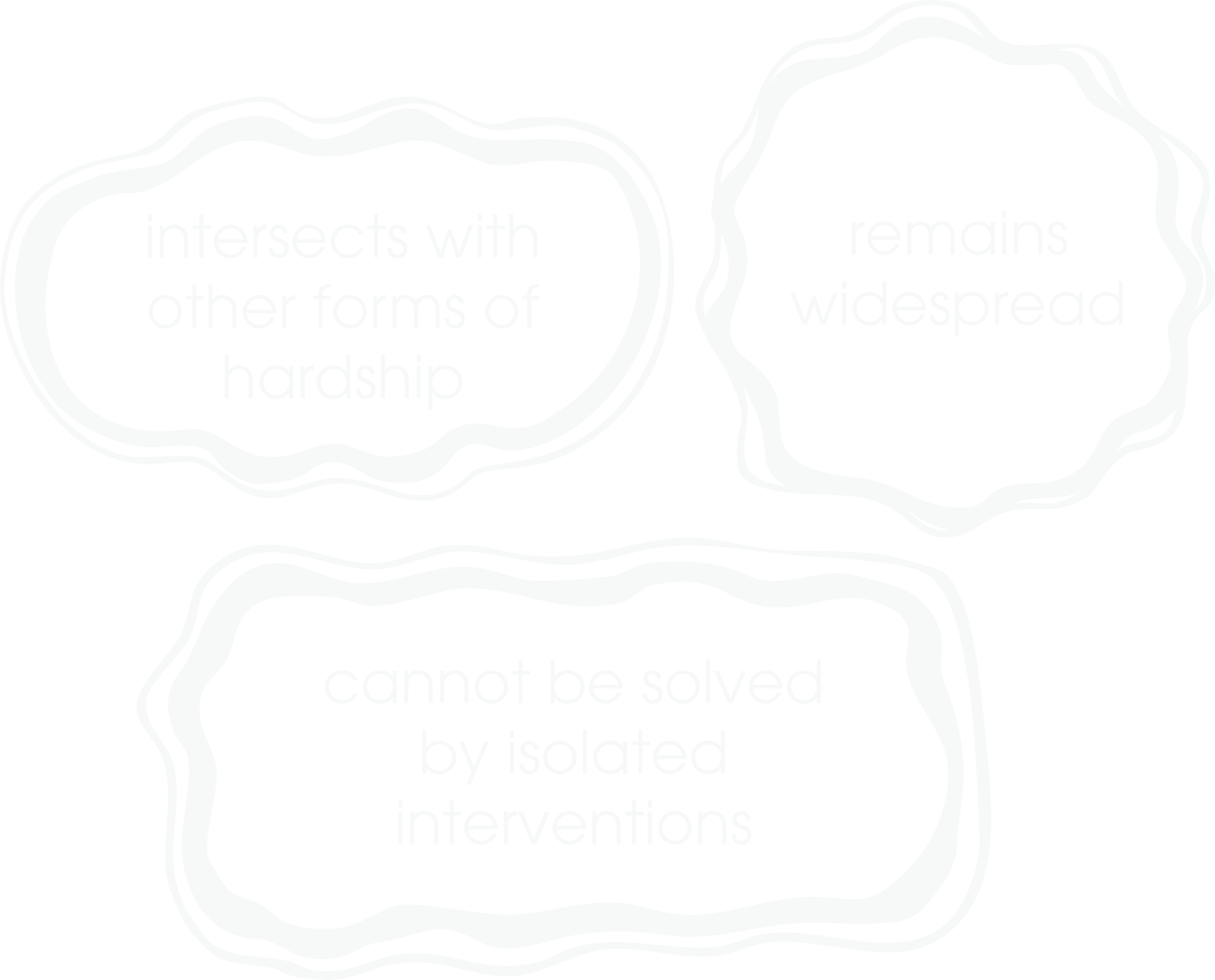
While our methodologies differ, our findings point toward a shared conclusion. Food insecurity:
Each organization brings a distinct lens to this work.
Both Trellis and The Hope Center document the prevalence and severity of student food insecurity. They also examine how food insecurity intersects with housing insecurity, mental health challenges, childcare responsibilities, transportation barriers, and student success outcomes. The Hope Center works with institutional leadership and Swipe Out Hunger works with student leaders and campus administrators to advance on-campus solutions, build an active network of advocates against college food insecurity, and change the narrative on the issue.
While our methodologies differ, our findings point toward a shared conclusion. Food insecurity:
remains widespread
intersects with other forms of hardship
cannot be solved by isolated interventions

The findings in this brief suggest that:
student need remains high,
campus supports remain essential,
and the systems designed to help students meet their basic needs require greater investment, coordination, and sustainability.
At a moment when institutions are being asked to do more with less, this brief offers a shared understanding of both the scale of the challenge and the opportunities for action.
More importantly, it offers a clear, aligned message: student hunger is not simply a food issue. Combatting it requires building systems that support basic needs affordability as a whole so students learn, persist, and thrive.
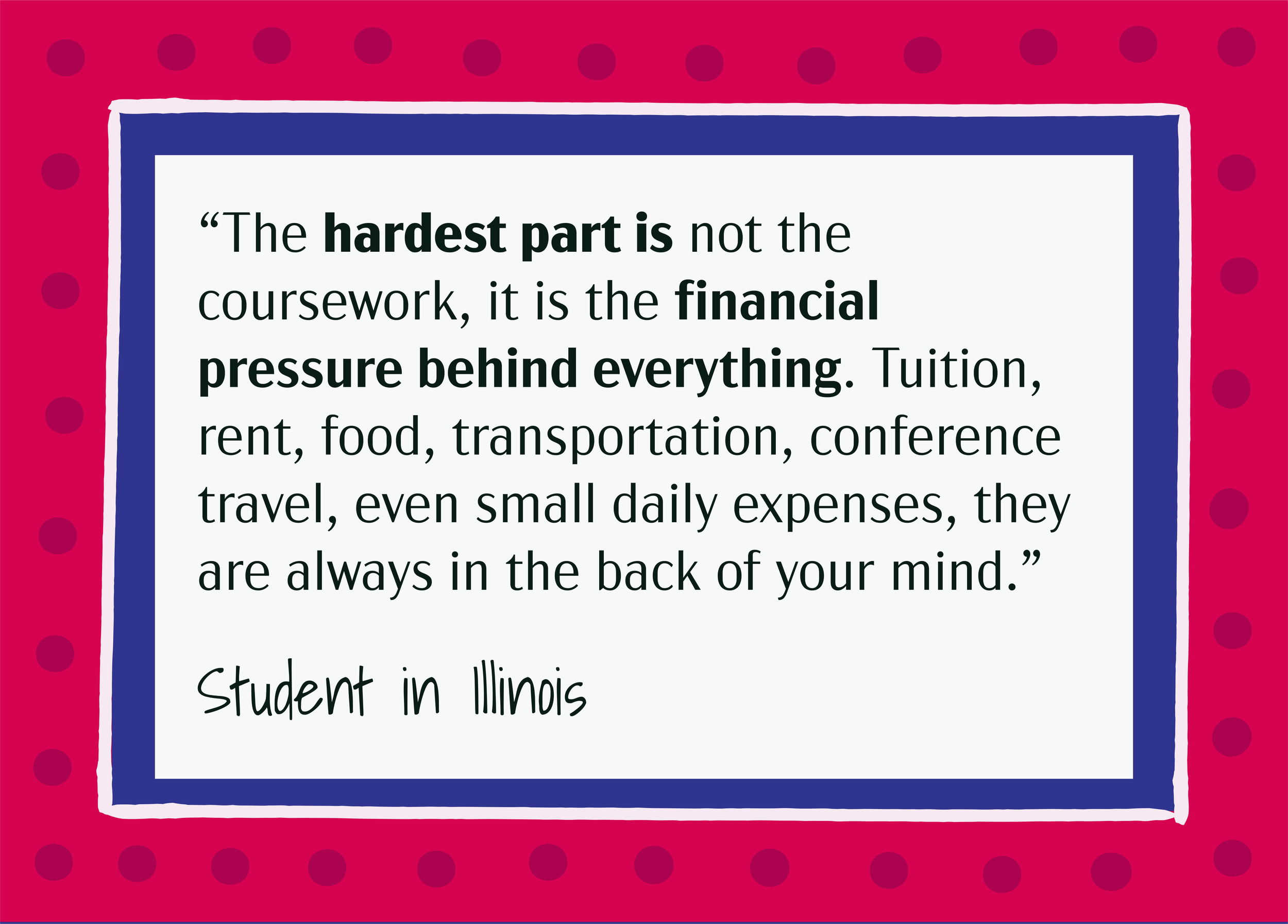
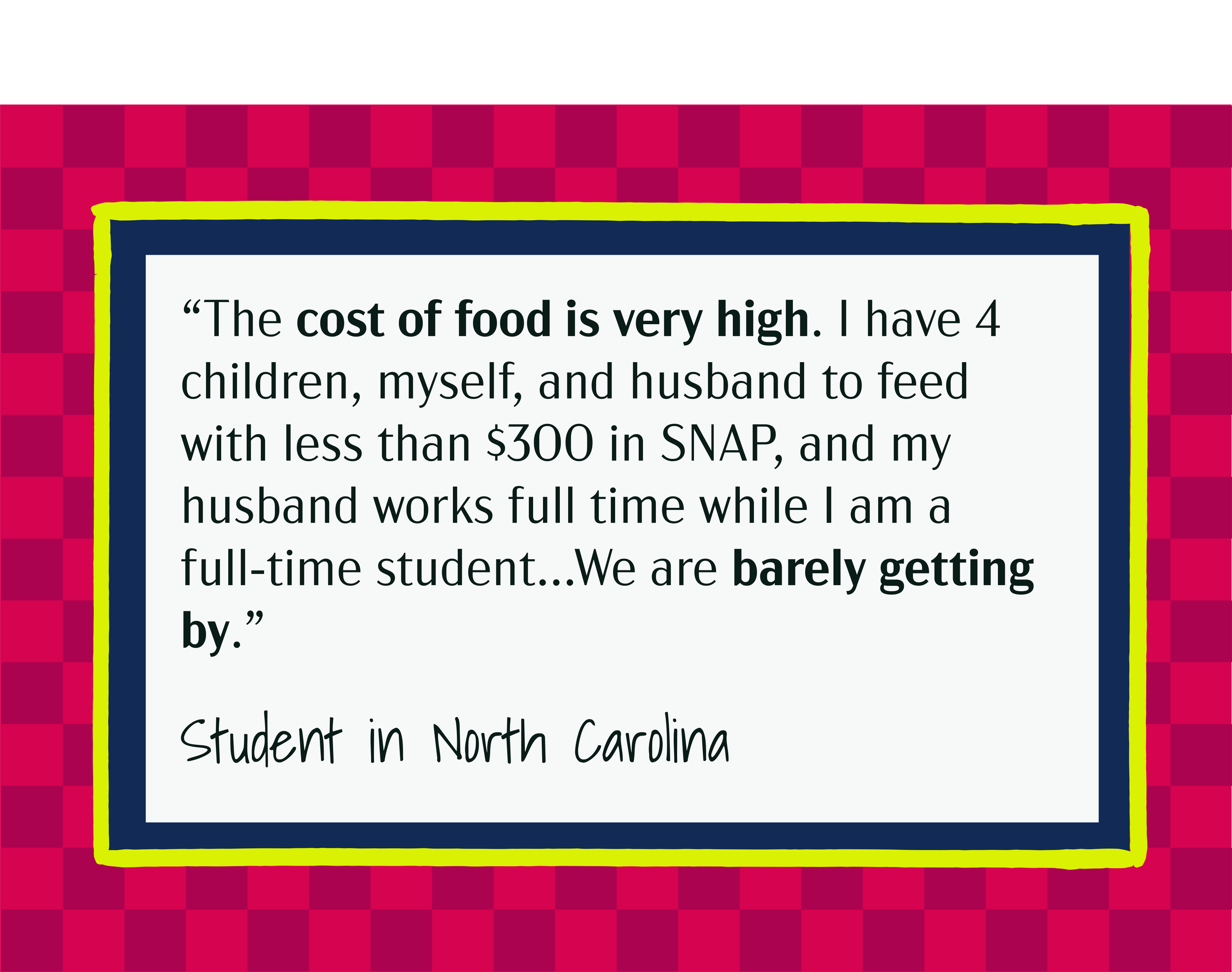
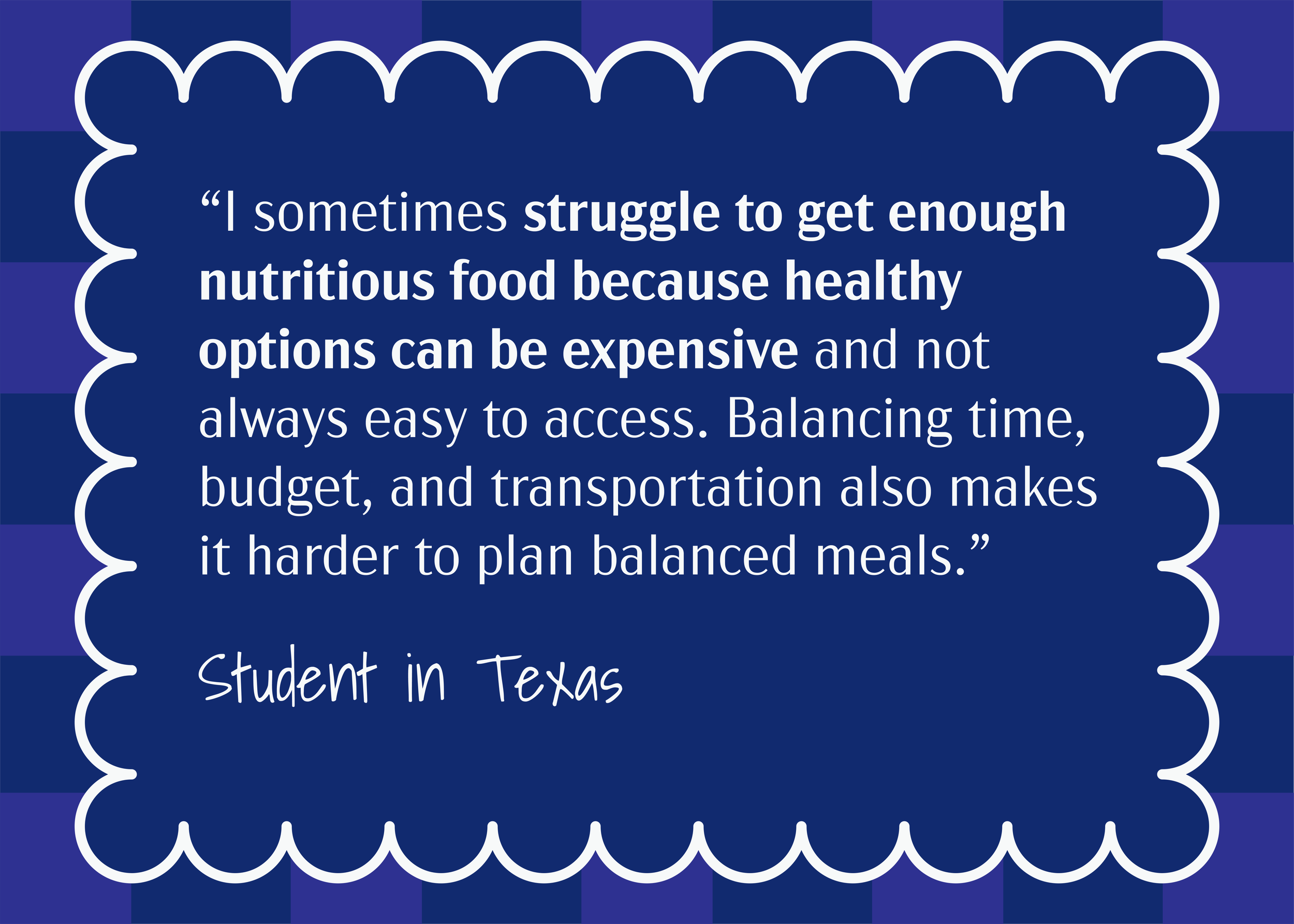
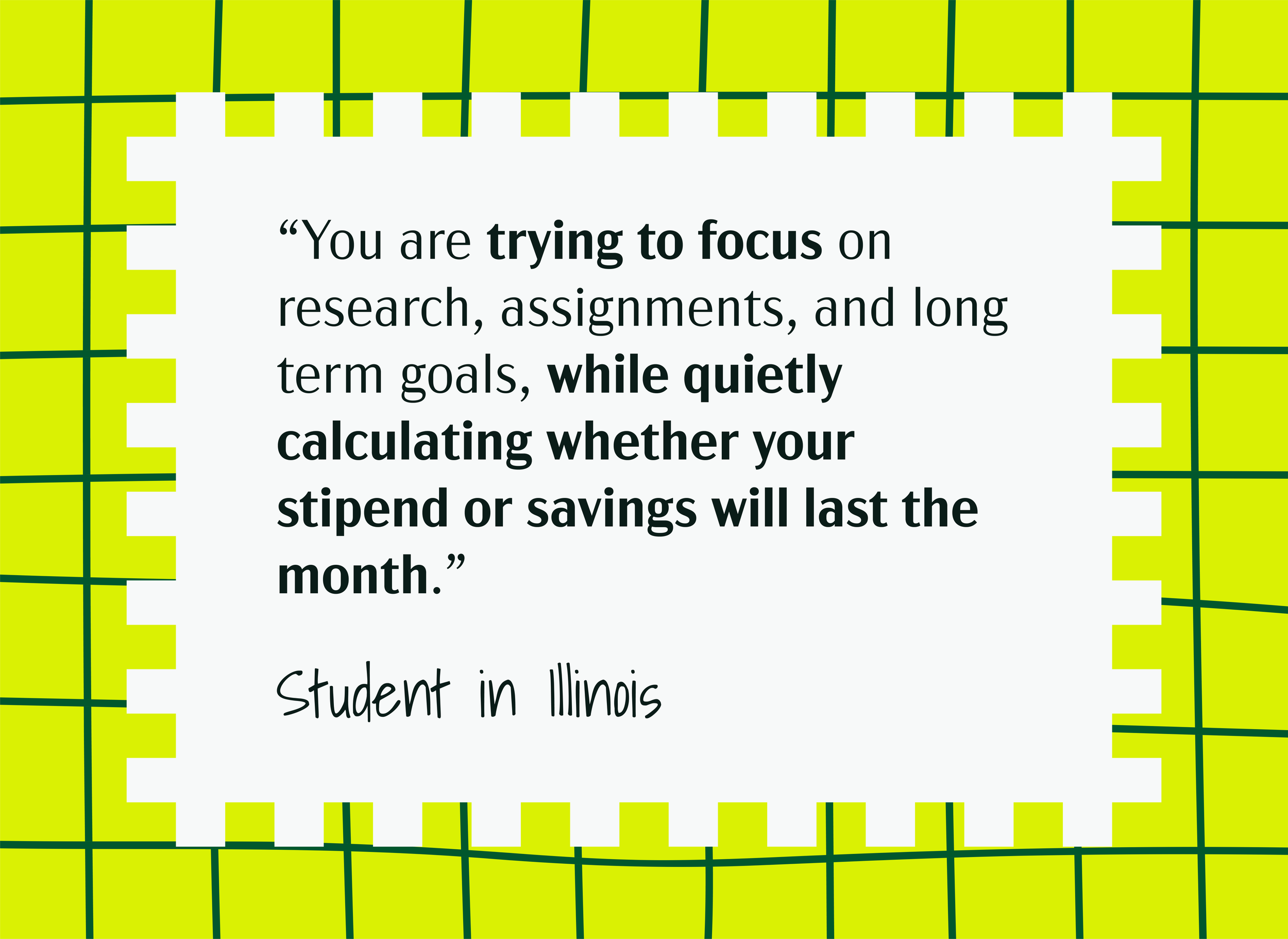
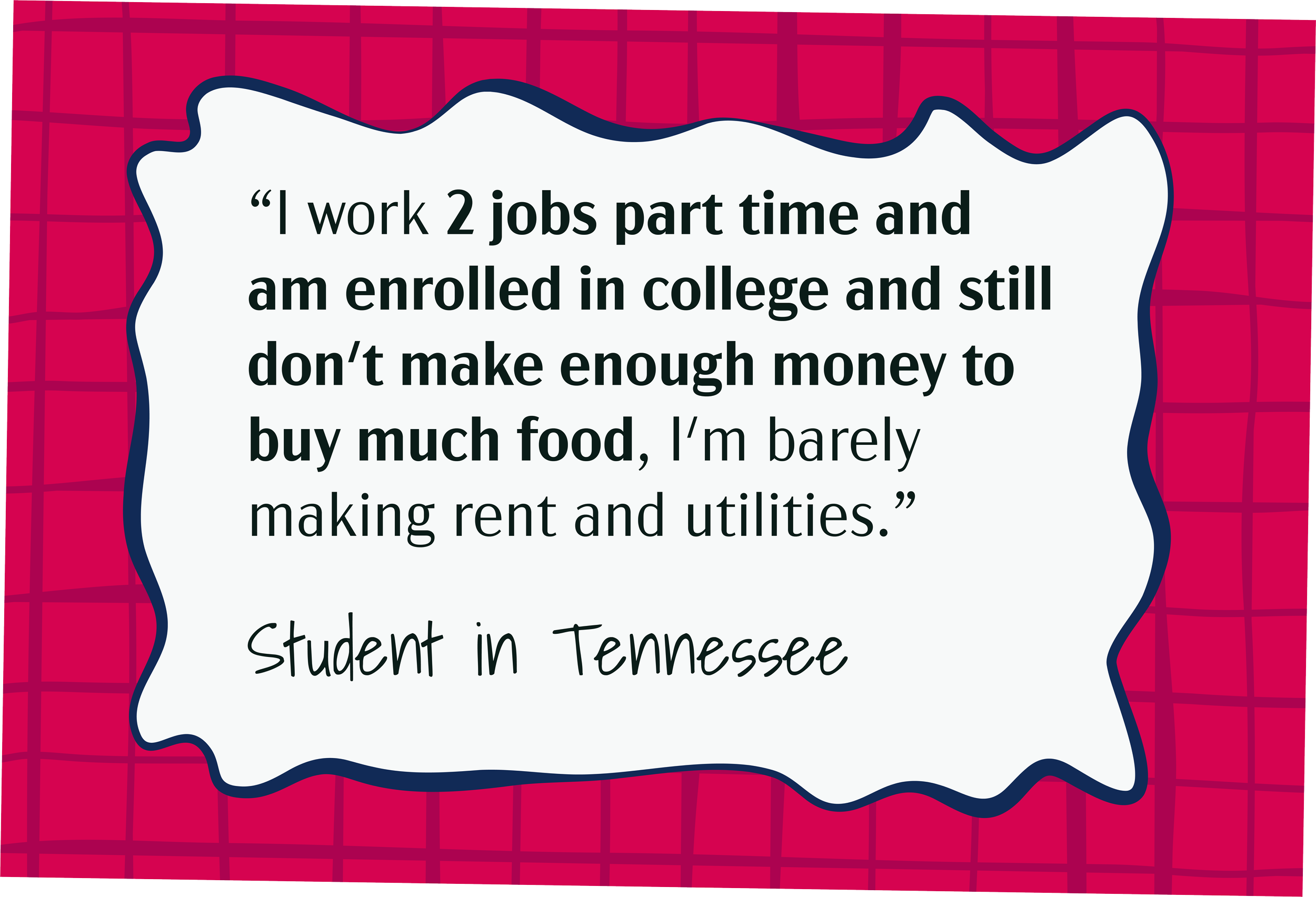
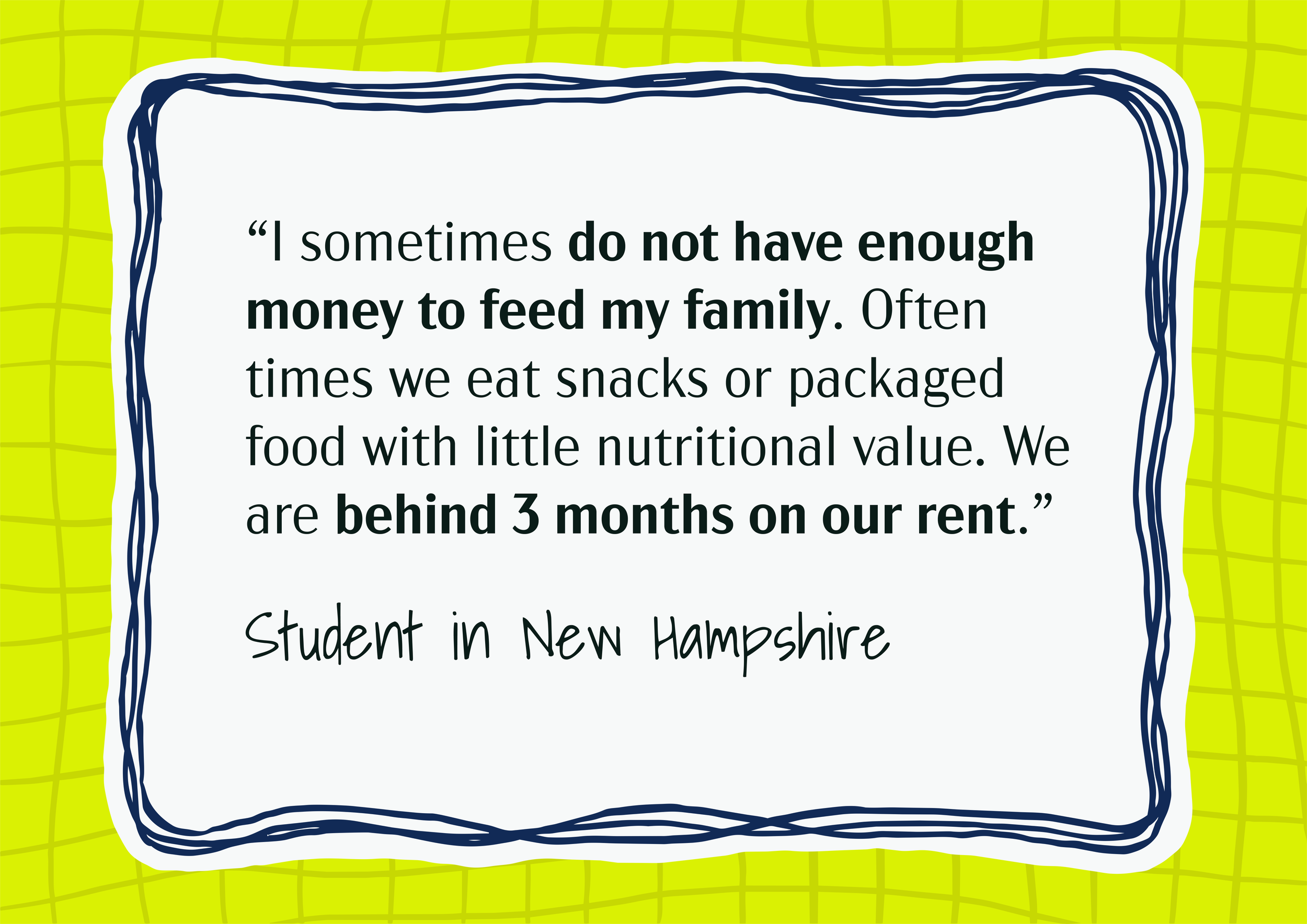
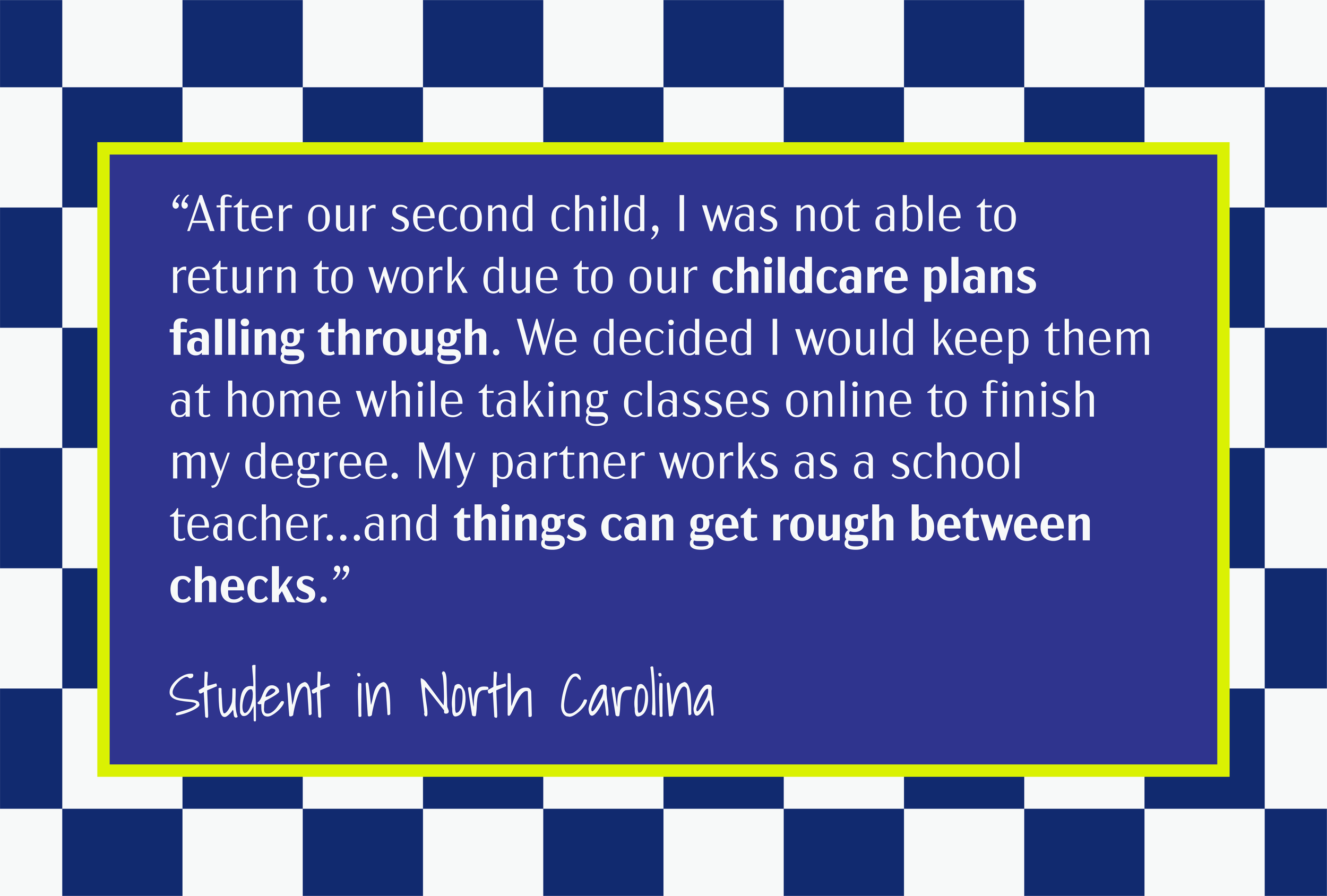
Click to Shuffle Through Students’ Experiences with Food Insecurity, in Their Own Words:
-
Basic Needs: A persistent lack of access to essential resources necessary for maintaining health, wellbeing, and academic success, including adequate housing, food, health care and mental health services, child care, internet connectivity, and transportation.
Food security: The economic and social condition of adequate access to food.
Food insecurity: The economic and social condition of limited or uncertain access to adequate food, characterized by reduced quality, variety, or desirability of diet or disrupted food intake. (USDA)
Student retention: The ability of educational institutions to keep students enrolled from semester to semester and ultimately through graduation. (EBSCO)
-
Student data presented in this report come from The Hope Center's Student Basic Needs Survey (47,416 student responses from 74 colleges and universities in 14 states between Fall 2024 and Spring 2026) and Trellis' Student Financial Wellness Survey (65,816 student responses 153 colleges and universities in 22 states between October 20 and November 11, 2025. Campus leader data presented in this report come from Swipe Out Hunger's Campus Leader Survey (completed by 299 campuses in Spring 2026). Methodological details and results tables are available in the Appendix.


Click Each Section to Expand it:
Section I: Student Hunger Remains Widespread
Section II: Hunger Rarely Happens Alone
Section III: The Support Gap
Section IV: Campuses Are Responding—But Capacity Is Strained
Section V: What Institutions Can Do Now

The Bottom Line
Student hunger is not inevitable.
Across the country, colleges and universities are developing innovative strategies to connect students with food, benefits, and broader systems of support. Yet no pantry, meal program, or emergency intervention can solve an affordability crisis on its own.
The findings in this report point to a simple but urgent reality: students cannot succeed academically if they cannot meet their basic needs. Addressing food insecurity requires more than food. It requires coordinated systems, sustained investment, and a commitment to ensuring that every student has the resources they need not just to enroll, but to thrive.
Suggested Citation:
The Hope Center for Student Basic Needs, Trellis Strategies, & Swipe Out Hunger. (2026). More than just food: A shared agenda for student food security and success. National Coalition for College Student Essential Needs (NCCSEN).
Help us spread the word about student food insecurity!

Contributing Organizations:
-
The Hope Center for Student Basic Needs (Hope) at Temple University’s Lewis Katz School of Medicine is a nationally recognized action-research center focused on ensuring that all college students—particularly those from low-income, underrepresented, and marginalized backgrounds—can meet their basic needs and succeed academically. For more than a decade, The Hope Center has shaped the student basic needs field through rigorous research, policy leadership, practitioner partnerships, and strategic communications that translate evidence into action. For more information, visit www.hope.temple.edu/about/.
Between Fall 2024 and Spring 2026, Hope implemented the Student Basic Needs Survey with 74 schools (14 states) who were participating in the Hope Impact Partnerships program to assess students’ basic needs and engage in action planning to improve supports. The survey was completed by 47,416 students (average response rate 19%
Additional Resources:
-
Trellis Strategies (Trellis) is an experienced research and technical assistance partner dedicated to advancing education and workforce development. Leveraging over four decades of experience in serving higher education institutions, Trellis’ dedicated team possesses the knowledge, insight, and expertise to empower organizations to turn data into impactful action and tangible results. For more information, visit www.trellisstrategies.org/about-us/.
Trellis implemented the Fall 2025 Student Financial Wellness Survey between October 20 and November 11, 2025, with invitations sent to 845,121 undergraduate students at 153 institutions in 23 states. Responses were received from 65,816 undergraduate students for a response rate of 7.8 percent. The responses were weighted by sector, gender, age, and enrollment intensity to better reflect the total population of the participating institutions.
Additional Resources:
-
Swipe Out Hunger is the national nonprofit powering the movement to end college student hunger. We collaborate with colleges, legislators, and the greater community to address student food insecurity by championing hunger solutions, building an active network of campuses and partners, and evolving the narrative around today’s college students. Since 2010, Swipe Out Hunger has enabled almost 30 million meals across more than 1,000 campuses throughout North America.
Swipe Out Hunger’s annual Campus Leader Survey collects self-reported data from campuses across the United States on their food security programs. The survey was completed by 297 campuses among the roughly 1,000 in our partner network.
Additional Resources: